
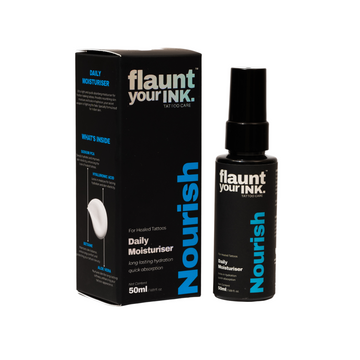
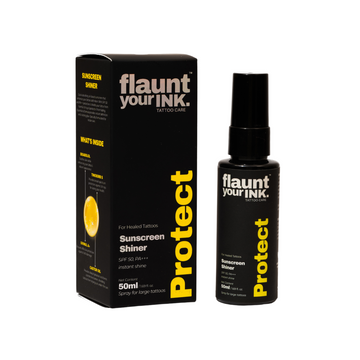





Most tattoo advice focuses on the first few weeks of healing, and then drops you. But here is the truth that nobody talks about enough: your tattoo needs ongoing care for its entire life. The ink sitting in your dermis is constantly interacting with your body, your environment, and the Indian climate. Without consistent maintenance, even the best tattoo from the most skilled artist will lose its sharpness and vibrancy over time.
Why Tattoos Fade: A Quick Science Recap
Understanding why fading happens helps you take targeted action against it. Tattoo ink is deposited in the dermis, held in place by your immune system's macrophage cells. Several factors break down this ink over time:
- UV radiation: Sunlight is the single biggest enemy of tattoo longevity. UV rays penetrate the epidermis and break down ink molecules in the dermis.
- Skin cell turnover: Your skin constantly regenerates. As old cells shed, tiny amounts of ink are carried away with them — a slow process that accumulates over years.
- Immune response: Your body never fully stops treating tattoo ink as foreign. White blood cells continuously attempt to break down and remove ink particles, transporting fragments to lymph nodes over time.
- Friction and abrasion: Areas that experience regular friction — hands, feet, inner arms, waistlines — lose ink faster due to constant mechanical stress.
- Environmental damage: Pollution, chlorine, and harsh skincare chemicals all contribute to premature fading.
- Aging skin: As skin naturally loses collagen and elasticity over the decades, it changes how the dermis holds ink — part of why the same tattoo looks different on the same person 20 years apart, even with identical care.
1. Follow a Simple Daily Routine
Morning: After your shower, gently cleanse tattooed areas with a mild foam cleanser. Pat dry with a soft towel. Apply a thin layer of tattoo moisturiser. If tattooed skin will be exposed to sun, follow with sunscreen.
Evening: Cleanse again to remove the day's sweat, pollution, and product buildup. Apply a slightly richer layer of moisturiser before bed — your skin does significant repair work overnight, and a dedicated night-time layer supports that process.
Weekly: Give tattooed skin a gentle exfoliation with a soft washcloth and very light pressure. Never use harsh scrubs or exfoliating acids directly on tattoos.
2. Moisturise Like It's Non-Negotiable
Hydrated skin is translucent and supple, which lets tattoo ink show through vividly. Dry, dehydrated skin looks ashy and dull, making even a well-executed tattoo appear faded.
- Use a moisturiser formulated for tattooed skin, not generic body lotion
- Switch between lighter, water-based formulas in humid months and richer creams in dry winter — especially important in northern India
- Pay extra attention to thin-skinned areas like wrists, inner arms, and ankles
- Apply moisturiser on slightly damp skin after bathing for better absorption
3. Never Skip Sunscreen
You spent thousands of rupees and hours of discomfort getting your tattoo. Skipping a thirty-second sunscreen application is the fastest way to undo all of that.
- Apply SPF 50+ broad-spectrum sunscreen to all exposed tattoos before going outdoors
- Reapply every two hours during extended outdoor time
- Don't rely on clothing alone — thin, light-coloured fabrics let UV through
- Lip, finger, and ear tattoos are frequently forgotten during sunscreen application — and fade fastest because of it
- Cloudy days are not safe days — up to 80% of UV passes through cloud cover
4. Adjust for India's Seasons
India's dramatic seasonal shifts mean your routine needs to adapt through the year. See our full guide on tattoo care in Indian summer for a detailed seasonal breakdown — the short version: increase cleansing frequency and switch to lighter moisturiser in summer heat, focus on keeping skin clean and dry during humid monsoon months, and switch to richer moisturiser applied more frequently through the dry winter, particularly in northern India.
5. Watch for Touch-Up Signals
- Colour fading — reds and yellows fade faster than blacks and blues
- Line blurring — fine lines spreading slightly over the years (ink migration)
- Patchy areas where healing didn't go perfectly
- A well-cared-for tattoo from a skilled artist may not need a touch-up for 5-10 years or longer
6. Know When to See a Dermatologist
- Raised, bumpy, or textured areas developing months or years after healing — often an allergic reaction to a specific ink colour, most commonly red
- Persistent itching or irritation in one area, which might signal a delayed allergic reaction
- Any unusual growth, mole changes, or discolouration in or around the tattoo
- Scarring that becomes more prominent over time, particularly relevant for Indian skin tones prone to keloid formation
7. Mind Your Swimming and Gym Habits
Swimming: Chlorinated pools and salt water both accelerate fading. Apply a thick moisturiser barrier before swimming, and cleanse plus reapply moisturiser immediately after.
Gym and fitness: Heavy sweating and friction from equipment affect tattoos. Clean tattooed skin after every workout.
8. Watch Pollution, Diet, and Smoking
Pollution: Living in heavily polluted Indian cities means constant exposure to particulate matter that clogs pores. A thorough evening cleanse is non-negotiable for city dwellers.
Diet and hydration: Your skin's health reflects overall health. Adequate water, vitamins A, C and E, and good sleep all support skin that displays tattoos well.
Smoking: Restricts blood flow to skin, accelerating aging and affecting tattoo appearance over time.
Harsh skincare products: Avoid retinoids, glycolic acid, or salicylic acid directly on tattoos — these accelerate cell turnover and speed up ink fading.
9. Build the Right Product Routine
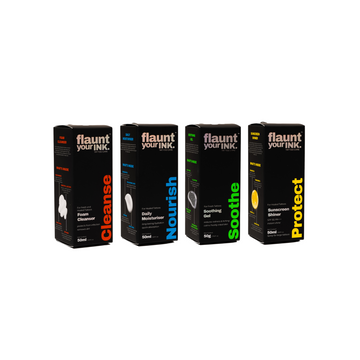
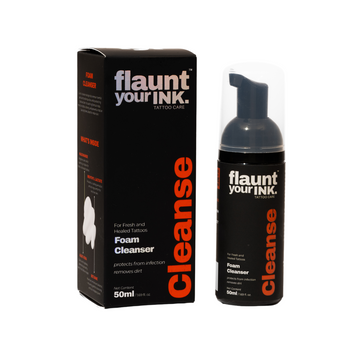
- A gentle tattoo cleanser that removes dirt and oil without stripping the moisture barrier
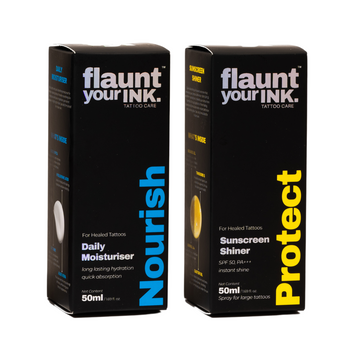
- A daily moisturiser formulated for tattooed skin
- A high-SPF tattoo sunscreen that protects against UV fading
The Compound Effect of Consistent Care
Here is what most people don't realise about long-term tattoo care: the benefits compound over time. A tattoo that receives daily moisturising and sunscreen protection for five years will look dramatically different from an identical tattoo that was neglected. The effort required is minimal — two minutes in the morning, two minutes at night. That is all it takes to preserve something you spent hours in a chair and thousands of rupees to get.
For more on specific topics: see our guide on why tattoos fade for the full science, getting your first tattoo in India if you're just starting out, and why coconut oil isn't the aftercare shortcut it seems.
Sources