





If you already know your skin reacts to new products, gets irritated easily, or you've dealt with eczema or psoriasis in the past, getting a tattoo comes with an extra layer of things to think through. The good news: sensitive skin and tattoos are absolutely compatible — it just takes a slightly more careful approach to aftercare than the generic advice most people get.
1. Patch-Test Before Full Application
This is the single most useful thing sensitive-skin tattoo owners can do and the thing most people skip. Before using any new aftercare product across your entire fresh tattoo, apply a small amount to a healed patch of skin elsewhere on your body and wait 24 hours to check for a reaction.
Why it matters: A reaction on a small test patch is a minor inconvenience. The same reaction across a large, freshly healing tattoo is a genuinely painful, disruptive problem — patch-testing catches this before it becomes one.
2. Choose Fragrance-Free, Non-Comedogenic Products
Fragrance is one of the most common triggers for skin irritation and allergic reactions, and it serves no functional purpose in aftercare — it's purely cosmetic. Comedogenic products, meanwhile, clog pores, which is a bigger risk on already-sensitive, healing skin than on typical skin.
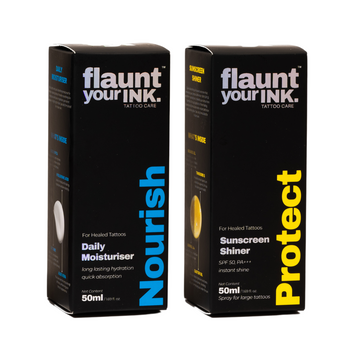
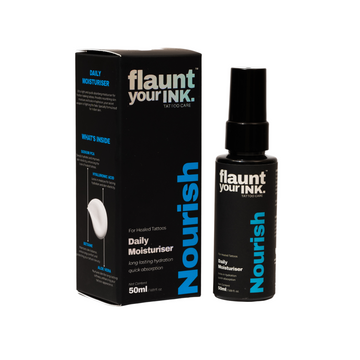
What to look for: Products explicitly labelled fragrance-free and non-comedogenic, like our Daily Tattoo Moisturiser. If a product's ingredient list is long and unfamiliar, that's often a sign it's formulated for broad appeal rather than sensitive skin specifically.
3. Avoid Common Irritant Ingredients
Certain ingredients show up repeatedly as triggers for people with reactive skin, even in products marketed as gentle.
- Parabens — preservatives linked to irritation in sensitive individuals
- Harsh sulfates — common in cleansers, can strip skin's natural barrier
- Alcohol-based products — drying and irritating on healing skin specifically
Checking ingredient labels before your appointment, not after a reaction starts, saves a lot of discomfort.
4. Watch for Red-Ink Allergic Reactions Specifically
This is a pattern worth knowing about in advance if you have any history of skin allergies: red ink is, by a meaningful margin, the most common trigger for tattoo ink allergic reactions. Certain red pigments contain compounds the immune system can flag as foreign, sometimes triggering a reaction weeks or even months after the tattoo has otherwise healed normally.
What to watch for: Raised, itchy, or bumpy texture that appears specifically within red-inked areas of a tattoo, distinct from the rest of the design. If you have a known sensitivity, discuss red ink specifically with your artist beforehand.
5. Manage Eczema or Psoriasis-Prone Skin During Healing
If you have a history of eczema or psoriasis, the healing process can occasionally trigger a flare in or near the tattooed area, since both conditions are related to skin barrier and immune sensitivity — exactly the systems a fresh tattoo also stresses.
What to do: Keep the area consistently moisturised with a gentle, fragrance-free formula, avoid any products with active exfoliants during healing, and if you notice a flare pattern you recognise from past episodes, don't wait it out — get ahead of it with whatever management approach has worked for you before.
6. Know When Redness Is Normal vs. a Reaction
Some redness and warmth around a fresh tattoo is completely normal — it's a basic part of the skin's healing response, sensitive skin or not. The distinction that matters is pattern and duration.
- Normal: mild redness right around the tattooed area, easing over the first few days
- Possible reaction: redness or bumps extending noticeably beyond the tattoo's edges, intensifying rather than easing, or accompanied by significant itching that doesn't settle
7. When to See a Dermatologist
Most sensitive-skin tattoo healing goes smoothly with the precautions above. But a few signs are worth a professional check rather than waiting it out — the same warning signs we cover in more depth in our guide on keeping old tattoos looking new.
- Raised, bumpy, or textured areas developing weeks or months after healing (especially within red ink)
- Persistent itching or irritation isolated to one area of the tattoo
- Any reaction that's intensifying rather than settling after several days
A dermatologist experienced with tattoo-related skin issues can distinguish a normal healing variation from something that needs treatment — worth the visit for peace of mind alone.
Building Trust With Your Skin
Sensitive skin doesn't mean tattoos are off the table — it means being a little more deliberate about what touches your skin during healing. Patch-test, read labels, and know your own history. For more on choosing the right products and studio for your first tattoo, see our guide on getting your first tattoo in India, and for what dermatologists say about common home remedies, see our breakdown of coconut oil on tattoos.